5 Health data
The data collections detailed below are supplied by NHS England. NHS England is responsible for the collation of all these except for Civil birth and death registrations, which are collated by the Office for National Statistics (ONS).
A pseudonymized, unique identifier (the Token Person ID; TPI) can be used to follow individuals within and across the health datasets.
5.1 Hospital Episode Statistics
Hospital Episode Statistics (HES) captures activity within NHS-funded hospitals in England, including inpatient hospital attendances, outpatient attendances, and A&E contacts. Approximately 97% of all children born in NHS-funded hospitals in England have a birth record in HES.
HES records contain basic demographic information (e.g., sex, ethnicity), area-level deprivation measured by the Index of Multiple Deprivation (IMD) of residential postcode (available at the Medium Super Output Area; MSOA level). Clinical information is based on International Classification of Diseases 10th Revision (ICD-10) diagnostic codes and Office of Population Censuses and Surveys Classification of Interventions and Procedures 4th Revision (OPCS-4) procedure codes (NHS England, 2023g).These codes can be used to create phenotypes; published examples of these are available in the ECHILD phenotype repository.
HES data are collected from hospital care providers for each financial year (1st April to 31st March) and curated on an ongoing basis. Following processing and quality assessment, finalised datasets are released for secondary use and remain unchanged thereafter (Boyd et al., 2018).
5.1.1 Admitted Patient Care
Years available: 1997 to 2023
APC is an episode-level dataset of patients admitted for treatment (i.e., requiring the use of a hospital bed), at NHS hospitals in England; includes delivery and birth data, up to 20 diagnostic codes per episode and procedure codes (Herbert et al., 2017; Boyd et al., 2018; Health Data Research, 2023b).
Records within APC are called ‘hospital episodes’, and each episode relates to a period of care for a patient under a single consultant (consultant episode) within one hospital provider (Herbert et al., 2017; Boyd et al., 2018; Health Data Research, 2023b). The time from initial admission to discharge is called a ‘spell’, defined as ‘periods of continuous care in one provider institution’ and each admission spell can be made up of many episodes. A hospital admission commences when a patient is initially admitted for care and ends when a patient is discharged, transferred, or dies. One spell of admission encompasses multiple episodes of care under a different consultant. APC data contain ‘Finished Admission Episodes’ which are the first episode in a spell of care, and ‘Finished Consultant Episodes’, which are a continuous period of care under one consultant. Only Finished Consultant Episodes concluded within the financial year (from 1st April to the end of 31st March) are included. Patients with an unfinished consultant episode in the current financial year will have their record represented as a finished episode in the next financial year of HES data.
A hospital admission commences when a patient is initially admitted for care and ends when a patient is discharged, transferred, or dies. One spell of admission encompasses multiple episodes of care under a different consultant.
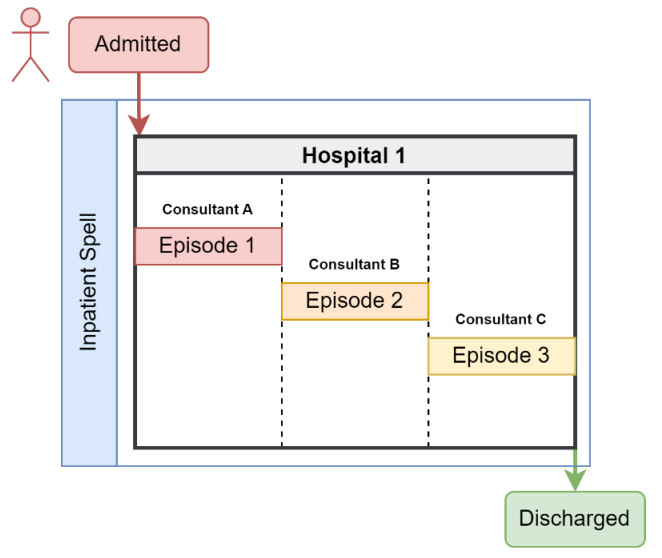 Figure 3: Inpatient spell (single hospital)
In some instances, admitted patients who require specialised treatment may be transferred from one hospital to another more specialist hospital, e.g., transfer to a Children’s hospital.
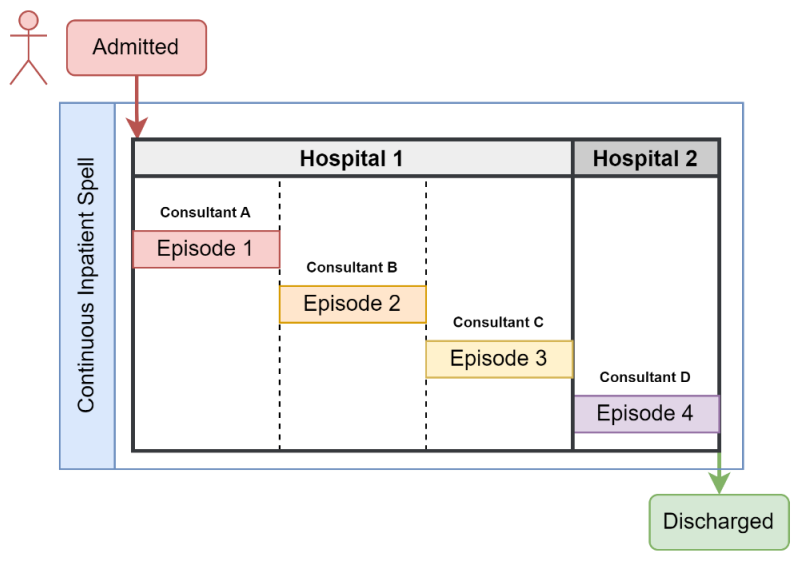 Figure 4: Continuous inpatient spell (across multiple hospitals). In some instances, admitted patients who require specialised treatment may be transferred from one hospital to another more specialist hospital, e.g., transfer to a Children’s hospital.
5.1.2 Critical Care (CC)
Years available: 2008 to 2023
Episode-level dataset of patients admitted for treatment and receiving Critical Care (intensive care or high dependency care) at NHS hospitals in England. Data are restricted those treated in wards where constant support and monitoring are required to maintain at least one organ (i.e., an Intensive Care or High Dependency Unit) (Health Data Research, 2023c; NHS England, 2024b). Children are only included in the data from 2017/18 onwards; prior to those, data were restricted to patients on adult designated wards.
5.1.3 Outpatients (OPA)
Years available: 2003 to 2023
Outpatient appointments at English NHS hospitals and NHS commissioned activity in the independent sector (regardless of whether the appointment was attended or not) (NHS England, 2023i; Health Data Research, 2023d). In 2003/04, the OP module was considered experimental and did not have complete coverage as not all providers completed data submissions. Diagnoses and procedures have very low levels of completeness in the Outpatient dataset (5% and 26%, respectively) (Boyd et al., 2018).
5.1.4 Accident & Emergency (A&E) / Emergency Care Dataset (ECDS)
Years available: 2007 to 2020 (A&E) and 2017 to 2023 (ECDS)
Attendance level dataset collecting information about the treatment received by patients attending A&E Departments, Minor Injury Units and Walk-In Centres, in England (NHS England, 2023e; Health Data Research, 2023a). Bespoke codes are used to record diagnoses and treatments (NHS England, 2023e); however, these are much more limited than ICD-10 and OPCS-4 codes and do not have high levels of completeness. Prior to 2012/13, the A&E module was considered experimental and did not have complete coverage as not all providers completed data submissions (NHS England, 2023f).
In 2018, the A&E dataset was replaced by the ECDS which is now the national dataset for Urgent & Emergency care (NHS England, 2023d, 2023c; Health Data Research, 2023a). Please note diagnoses aren’t consistently captured in ECDS records. ECDS uses a subset of SNOMED CT codes to record diagnoses and treatments (amongst other variables) (NHS England, 2023d, 2023c).
5.1.5 Mental Health Data
5.1.5.1 Mental Health Services Dataset (MHSDS)
Years available: 2016 to 2022
Patient-level dataset that records all activity relating to patients who receive assessments and treatment from Mental Health Services in England, where the patient has (or is thought to have): either a mental health condition; a need for support with their mental well-being; a learning disability; autism; or any other neurodevelopmental condition (NHS England, 2023l). MHSDS includes data supplied by both Children and Young People’s (formerly known as Child and Adolescent) mental health services, and adult mental health services.
MHSDS Data are collected about people treated in NHS-funded services for mental health and wellbeing, learning disability, autism or other neurodevelopmental conditions. Data collected include the type of care received, the length of care episodes, information on contact with mental health and social care professionals, and measures of health and social functioning. Please be reminded that data quality for MHSDS has not yet been fully assured; there is no single, reliable “diagnosis” variable for each individual or care episode. An individual can be associated with referrals to multiple services at the same time, for one or multiple reasons. Having a referral does not necessarily mean the referral is valid, accepted, or that treatment has been received. Further triangulation between MHSDS and other relevant data sources (such as HES, NHSBSA medicine dispensing, SCMD, and third-sector MH service providers) on diagnostic, crisis team, treatment and other service use is needed.
5.1.5.2 Mental Health & Learning Disabilities Dataset (MHLDDS)
Years available: 2014 to 2016
MHLDDS is collected from adult mental health services (NHS England, 2024c) and does not include information on children.
5.1.5.3 Mental Health Minimum Dataset (MHMDS)
Years available: 2006 to 2014
The MHMDS was the preliminary dataset capturing data about the use of adult Mental Health Services in England. However, the MHMDS was superseded by the Mental Health & Learning Disabilities Data Set, which in turn was superseded by the MHSDS (NHS England, 2024c). MHMDS includes data supplied by adult mental health services only and does not include children.
5.1.6 Maternity and Births
5.1.6.1 Maternity Services Data Set (MSDS)
Years available: 2015 to 2019 (v1.5): and 2019 to 2022 (v2.0)
The MSDS is a patient-level dataset that captures information about activity carried out by Maternity Services relating to a mother and baby(ies), from the point of the first booking appointment until the mother and baby(ies) are discharged from maternity services. The MSDS collects records of each stage of the maternity service care pathway in NHS-funded maternity services and includes information not recorded in HES (NHS England, 2023a; Health Data Research, 2023e).
5.1.6.2 Birth notifications
Years available: 2003 to 2022
Birth notifications are documents completed by the doctor or midwife present at birth occurring in an NHS facility. At this point, the baby’s NHS Number is issued as part of the ‘statutory notification of birth’ (but is not visible within ECHILD). Birth notification data includes information that is not found in the birth registration data such as gestation age and ethnicity of the baby as stated by the mother (NHS England, 2023b).
5.1.6.3 Civil Registrations of Births
Years available: 1996 to 2023
Birth Registration Data includes information recorded when births are registered. It is a legal requirement to register all births in England and Wales. These registrations are lodged with a local registry office and collated by the General Register Office (for England and Wales). The General Register Office shares these data with the Office for National Statistics which processes these data and further shares the data with NHS England. All registered live births are included except very late registrations received more than 14 months after the end of each reference year (there are fewer than 100 of these for any given year) (Office for National Statistics, 2024). Birth Registration Data in ECHILD does not contain records relating to stillbirths due to how the ECHILD cohort is defined.
5.1.7 Civil Registrations of Deaths
Years available: 1997 to 2024
It is a legal requirement to register all deaths in England and Wales. Death registrations are lodged with a local registry office and collated by the General Register Office (for England and Wales). The General Register Office shares these data with the Office for National Statistics which processes these data and further shares the data with NHS England. Mortality data contains information taken from death certificates for all deaths registered in England and Wales and includes cause of death, date and place of death. Information related to stillbirths is not available in this data. Some deaths, particularly those referred to a coroner, may not be registered until long after the date of death.
5.1.8 Community Services Dataset (CSDS)
The CSDS captures activity data about children and adults collected by Community Services, including health visiting teams. Such activities may take place in settings such as Health centres; Day care facilities; Schools or Community centres; Mobile facilities, or a patient’s own home (NHS England, 2023j). Data are collected about children and adults e.g., personal, demographic or social circumstances; breastfeeding and nutrition; long-term conditions (disabilities), diagnoses and scored assessments. The CSDS is comprised of patient-level data from all publicly funded community services providers e.g., Foundation or Non-Foundation Trusts; Acute Trusts; Mental health Trusts, Community Healthcare Trusts, Independent sector providers and Local Authorities. CSDS data are inconsistently captured over time; meaningful interpretation of data prior to 2018/19 is challenging (Clery et al., 2024).